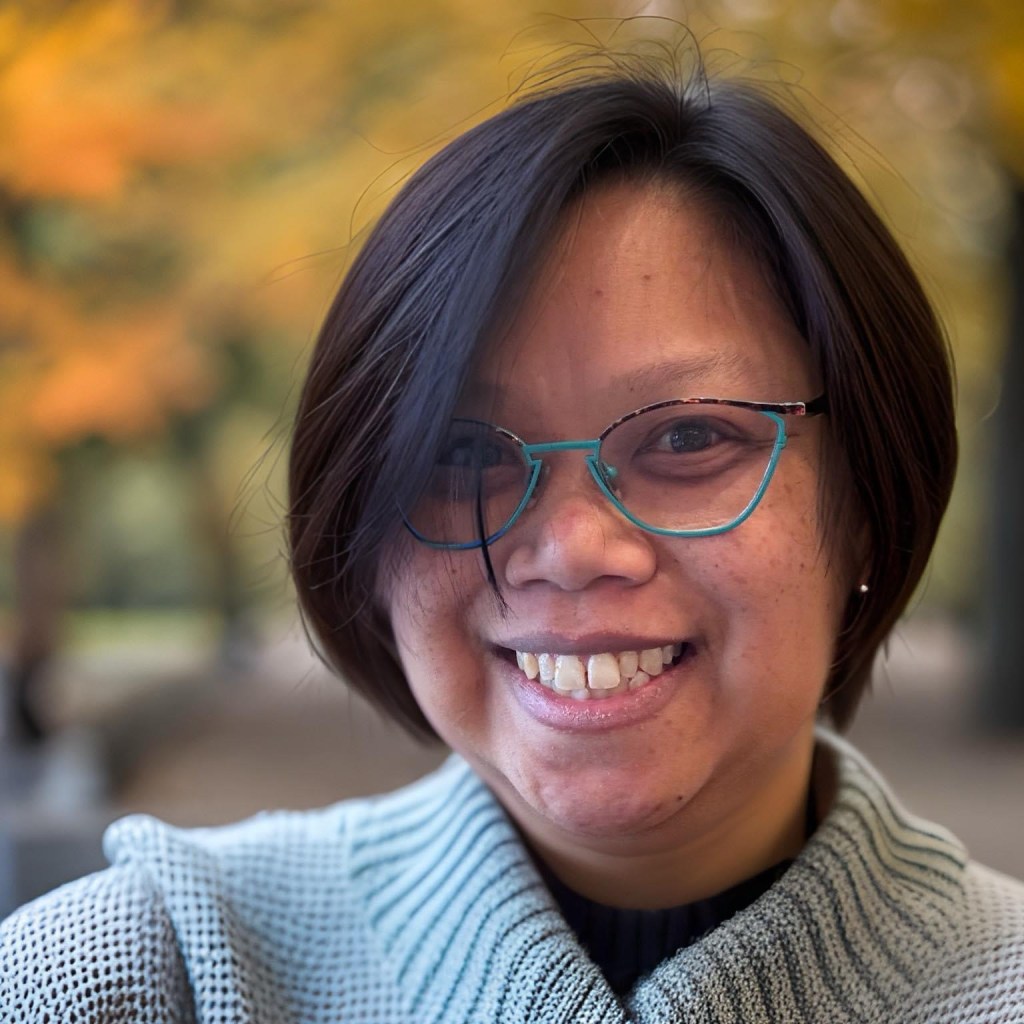
Short Bio
Amanda Reavey (MFA) is an interdisciplinary artist and poet, and an Emerita Poetry Fellow at Black Earth Institute. Her debut book, Marilyn (The Operating System, 2015), won the 2017 Best Book Award in Poetry from the Association for Asian American Studies. Her work has appeared in About Place Journal, Petrichor, and Bramble, among others. Amanda earned her MFA from Naropa University in Boulder, Colorado, and is currently pursuing her MSW at Concordia University-Wisconsin. She is also the Co-Vice President of the Wisconsin Fellowship of Poets, and the founder and co-host of Tabi Po Poetry.
Long Bio
Amanda Reavey (MFA) is an interdisciplinary artist, bookbinder, and poet whose practice centers on artist books, handmade paper, and the physical presence of text. Working across writing and craft, she creates tactile objects that invite slow engagement and foreground attention, restraint, and materiality.
Her work explores the meeting place of language and form through bookbinding, typewriter poetry, paper making, and related hand processes. Whether forming paper, binding a book, or composing text on the page, Reavey approaches making as a contemplative, embodied practice shaped by limits, repetition, and care. Her studio work emphasizes texture, surface, and light, encouraging intimate encounters with both word and object.
Reavey is the author of Marilyn (The Operating System, 2015), which received the 2017 Best Book Award in Poetry from the Association for Asian American Studies. Her writing has appeared in About Place Journal, Petrichor, Bramble, and other publications. She earned her MFA in Writing & Poetics from Naropa University and is an Emerita Poetry Fellow at the Black Earth Institute, a community committed to poetry as a practice of justice, spirituality, environmental care, and contemplation.
She currently serves as Co-Vice President of the Wisconsin Fellowship of Poets and is the founder and co-host of the Tabi Po Poetry reading and open mic series. Her work bridges literary and craft traditions, inviting viewers and readers into quiet, attentive encounters with paper, text, and the handmade.
 Amanda Reavey Studio